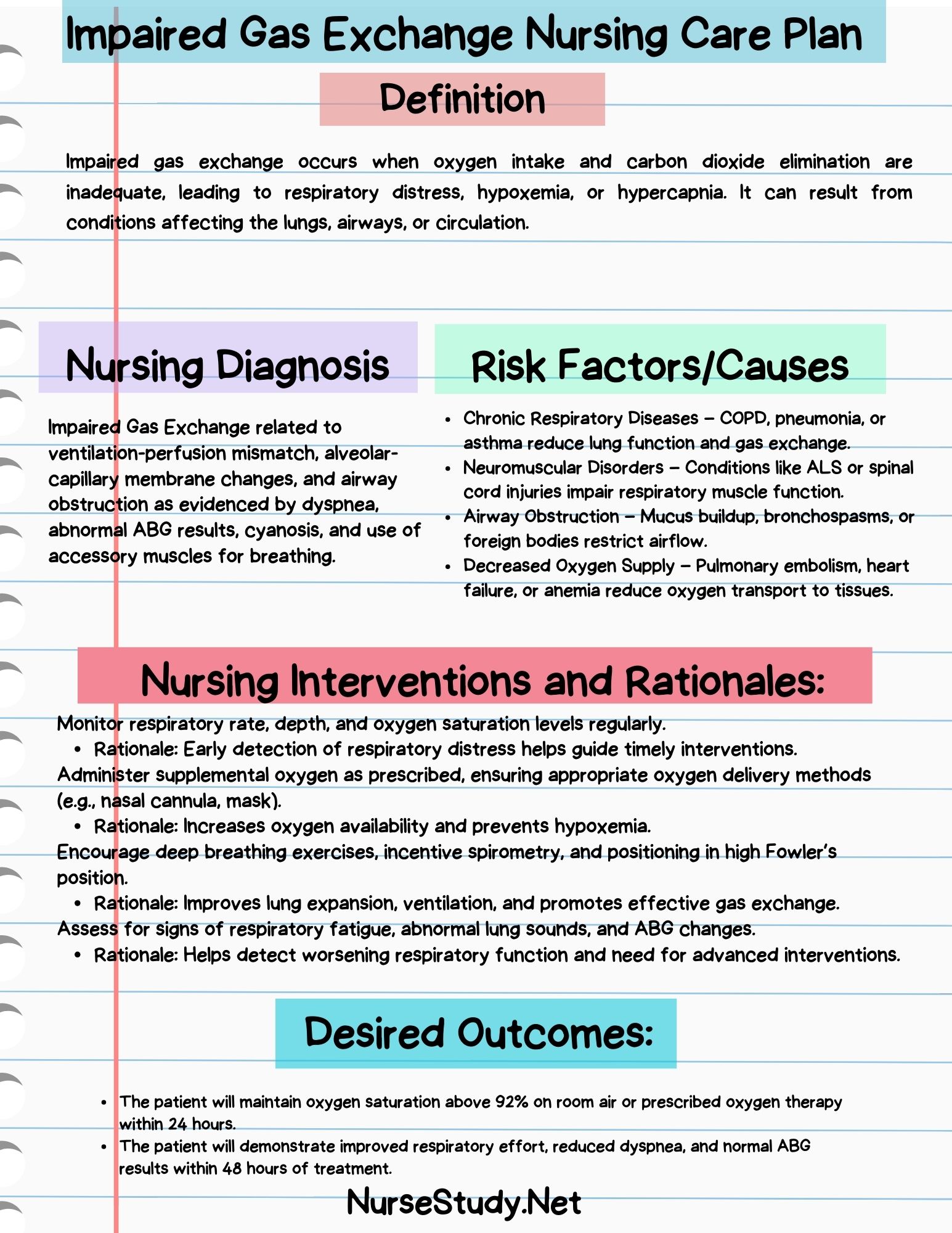
Impaired gas exchange is a critical NANDA-approved nursing diagnosis that occurs when oxygen and carbon dioxide fail to properly transfer across the alveolar-capillary membrane in the lungs. This disruption compromises the body’s ability to oxygenate tissues and eliminate carbon dioxide—two processes essential for cellular metabolism and survival.
For nursing students preparing for the NCLEX and nurses working in acute care settings, understanding impaired gas exchange is essential. This diagnosis frequently appears in patients with respiratory and cardiac conditions and requires immediate assessment and intervention.
Unlike related diagnoses such as Ineffective Breathing Pattern (which focuses on ventilation mechanics) or Ineffective Airway Clearance (which addresses secretion management), impaired gas exchange specifically targets dysfunction at the alveolar-capillary level where gases are exchanged between air and blood.
In clinical practice, we see this diagnosis most commonly in patients with chronic obstructive pulmonary disease (COPD), pneumonia, pulmonary embolism, acute respiratory distress syndrome (ARDS), and heart failure. Recognizing the subtle early signs—such as restlessness, slight changes in mental status, or gradual drops in oxygen saturation—can mean the difference between routine intervention and a respiratory emergency.
Definition and NANDA Criteria
According to NANDA-International, Impaired Gas Exchange is defined as “excess or deficit in oxygenation and/or carbon dioxide elimination at the alveolar-capillary membrane”.
This definition emphasizes that the problem lies specifically at the microscopic interface between lung alveoli and pulmonary capillaries, not in the airways or respiratory muscles.
The alveolar-capillary membrane is normally only about 0.3 micrometers thick and allows rapid diffusion of gases based on partial pressure gradients. When this membrane becomes thickened (as in pulmonary fibrosis), filled with fluid (as in pulmonary edema), or bypassed entirely (as in pulmonary embolism, where blood cannot reach ventilated alveoli), gas exchange fails.
Impaired gas exchange is classified under NANDA Domain 3 (Elimination and Exchange) and specifically addresses physiological gas exchange dysfunction rather than ventilation effort or airway patency issues.
Pathophysiology of Impaired Gas Exchange
Understanding the underlying mechanisms helps nurses recognize why certain interventions work and when to escalate care.
Normal Gas Exchange Process
In healthy lungs, oxygen-rich air enters approximately 300 million alveoli during inspiration. These thin-walled sacs are surrounded by a dense network of pulmonary capillaries. Oxygen diffuses from alveoli (where partial pressure is approximately 100 mmHg) into capillary blood (where venous oxygen partial pressure is about 40 mmHg). Simultaneously, carbon dioxide moves in the opposite direction—from capillary blood (partial pressure ~45 mmHg) into alveoli (partial pressure ~40 mmHg).
This process takes approximately 0.75 seconds as red blood cells transit through the pulmonary capillaries, but under normal conditions, oxygen and carbon dioxide reach equilibrium within the first 0.25 seconds. This built-in “reserve” allows gas exchange to remain adequate even when cardiac output increases during exercise.
Mechanisms of Impaired Gas Exchange
Gas exchange fails when one or more of these essential factors is disrupted:
- Thickened alveolar-capillary membrane
Conditions such as pulmonary fibrosis, interstitial lung disease, and ARDS cause membrane thickening, increasing diffusion distance and time. - Reduced surface area
Emphysema destroys alveolar walls, reducing available surface area for gas exchange from approximately 70 square meters to much less. - Ventilation-perfusion (V/Q) mismatch
- Fluid accumulation in alveoli
Pulmonary edema from heart failure or ARDS fills alveoli with fluid, creating a diffusion barrier between air and capillary blood. - Decreased capillary transit time
In some high-output states, blood may move too quickly through pulmonary capillaries for full gas equilibration. - Altered oxygen-carrying capacity
Severe anemia or carbon monoxide poisoning reduces the blood’s ability to transport oxygen even when diffusion is normal.
These mechanisms often overlap in critically ill patients, compounding the severity of impaired gas exchange and increasing the risk of acute respiratory failure.
Causes and Related Factors
Understanding etiologies helps nurses anticipate which patients are at risk and implement preventive measures.
Respiratory Disorders
- Chronic Obstructive Pulmonary Disease (COPD)
Chronic bronchitis and emphysema cause airflow limitation, air trapping, and alveolar destruction, leading to decreased surface area and V/Q mismatch. - Asthma exacerbation
Severe bronchospasm and airway inflammation impair ventilation and create V/Q mismatch between ventilated and perfused areas. - Pneumonia
Alveolar inflammation and fluid consolidation block gas exchange surfaces and reduce effective surface area. - Acute Respiratory Distress Syndrome (ARDS)
Diffuse alveolar damage, hyaline membrane formation, and pulmonary edema thicken the alveolar-capillary membrane and severely impair diffusion. - Pulmonary fibrosis
Progressive scarring thickens the alveolar-capillary membrane and reduces lung compliance. - Atelectasis
Collapsed alveoli cannot participate in gas exchange; shunt physiology develops as blood flows past unventilated units. - Pulmonary edema
Fluid accumulation from cardiac (left-sided heart failure) or non-cardiac causes (ARDS) increases diffusion distance.
Cardiovascular Disorders
- Congestive heart failure
Elevated pulmonary venous pressure causes fluid to leak into alveoli, resulting in pulmonary edema and hypoxemia. - Pulmonary embolism
Blood clots obstruct pulmonary blood flow, creating dead space ventilation where alveoli are ventilated but not perfused. - Congenital heart defects with shunting
Right-to-left shunts allow deoxygenated blood to bypass the lungs entirely, causing refractory hypoxemia.
Neurological and Neuromuscular Conditions
- Spinal cord injuries
High cervical injuries impair diaphragm and intercostal muscle function, leading to hypoventilation and CO₂ retention. - Guillain-Barré syndrome
Progressive muscle weakness can lead to respiratory failure when respiratory muscles are involved. - Myasthenia gravis
Neuromuscular junction dysfunction causes fluctuating respiratory muscle weakness. - Amyotrophic lateral sclerosis (ALS)
Progressive motor neuron degeneration eventually affects respiratory muscles, impairing ventilation.
Other Contributing Factors
- Severe obesity
Restricts lung expansion, decreases functional residual capacity, and increases work of breathing. - Severe anemia
Reduces oxygen-carrying capacity even if lungs function normally. - Smoking
Damages alveolar structures, promotes chronic inflammation, and accelerates emphysematous changes. - High altitude
Reduced atmospheric oxygen partial pressure decreases the driving gradient for diffusion. - Medication-induced respiratory depression
Opioids, sedatives, and anesthetics depress respiratory drive and can lead to hypoventilation and hypercapnia. - Carbon monoxide poisoning
CO binds hemoglobin with much higher affinity than oxygen, preventing oxygen transport despite normal diffusion.
Signs and Symptoms
Recognizing impaired gas exchange requires systematic assessment of both subjective patient reports and objective clinical findings.
Subjective Data (Patient Reports)
- Dyspnea (shortness of breath)
Often described as “air hunger,” “can’t catch my breath,” or “chest tightness.” - Orthopnea
Difficulty breathing when lying flat; patient may report needing multiple pillows or sleeping in a chair. - Fatigue and weakness
Tissue hypoxia reduces energy production and contributes to generalized fatigue. - Dizziness or lightheadedness
Cerebral hypoxia affects consciousness and balance. - Confusion or difficulty concentrating
The brain is highly sensitive to oxygen deprivation; subtle cognitive changes may be an early sign. - Anxiety or sense of impending doom
Hypoxia triggers a stress response and can amplify perceived breathlessness. - Chest discomfort
May be pleuritic (sharp, worse with inspiration) or described as pressure or tightness.
Objective Data (Nurse Observes)
Respiratory findings:
- Tachypnea (respiratory rate > 20 breaths/minute in adults).
- Altered breathing patterns (shallow, irregular, labored, or rapid).
- Use of accessory muscles (sternocleidomastoid, scalene, intercostals).
- Nasal flaring, suprasternal or intercostal retractions.
- Paradoxical breathing or abdominal breathing patterns.
- Abnormal lung sounds (crackles, wheezes, rhonchi, diminished or absent breath sounds).
Cardiovascular findings:
- Tachycardia (compensatory response to hypoxia).
- Bradycardia (late, ominous sign in severe hypoxia).
- Hypertension (early compensation) or hypotension (late decompensation).
- Arrhythmias related to hypoxia or acidosis.
Skin and tissue perfusion changes:
- Cyanosis—bluish discoloration of lips, nail beds, and mucous membranes (late sign; indicates significant hypoxia).
- Pale or mottled skin.
- Diaphoresis (sweating).
- Cool, clammy extremities.
Neurological changes:
- Restlessness and agitation (early hypoxia).
- Altered level of consciousness.
- Decreased Glasgow Coma Scale score.
- Lethargy or somnolence (late sign; indicates severe hypoxia or hypercapnia).
Laboratory and diagnostic findings:
- Decreased oxygen saturation (SpO₂ < 90–95% depending on patient baseline).
- Abnormal arterial blood gases (ABGs):
- PaO₂ < 80 mmHg (hypoxemia).
- PaCO₂ > 45 mmHg (hypercapnia) or < 35 mmHg (hypocapnia).
- pH < 7.35 (acidosis) or > 7.45 (alkalosis).
- Abnormal chest X-ray findings (infiltrates, consolidation, effusions, hyperinflation, or edema).
Expected Outcomes and Goals
Nursing outcomes should be specific, measurable, achievable, relevant, and time-bound (SMART). Goals are individualized based on patient baseline and underlying condition.
- Adequate oxygenation maintained
Patient will maintain oxygen saturation ≥ 92–95% (or within individualized target range) on room air or prescribed oxygen therapy within 24–48 hours. - Effective ventilation demonstrated
Patient will maintain respiratory rate between 12–20 breaths per minute with regular, unlabored breathing pattern within 48 hours. - Improved arterial blood gas values
Patient’s ABG results will return to baseline or acceptable ranges (pH 7.35–7.45, PaO₂ ≥ 80 mmHg, PaCO₂ 35–45 mmHg) within 72 hours. - Reduced respiratory distress
Patient will report decreased dyspnea and demonstrate reduced use of accessory muscles within 24 hours. - Improved mental status
Patient will demonstrate orientation to person, place, and time and return to baseline cognitive function within 48 hours. - Enhanced activity tolerance
Patient will perform activities of daily living without significant dyspnea or desaturation within 3–5 days. - Patient understanding demonstrated
Patient (or family) will verbalize understanding of condition, medications, breathing techniques, and when to seek help before discharge.
Nursing Assessment
Comprehensive assessment identifies the severity of impaired gas exchange and guides intervention priorities.
Health History
- Past medical history: previous respiratory or cardiac diagnoses, chronic conditions (COPD, asthma, heart failure).
- Smoking history: pack-years and current smoking status.
- Recent illness or injury: recent upper respiratory infections, trauma, surgery, or hospitalization.
- Medication history: current medications, especially bronchodilators, corticosteroids, diuretics, anticoagulants; also note any medications that depress respiration (opioids, sedatives).
- Occupational and environmental exposures: dust, chemicals, allergens, or high altitude.
- Onset and progression of symptoms: acute versus chronic, triggers or exacerbating factors.
Physical Examination
Inspection:
- General appearance: position of comfort (tripod position suggests respiratory distress).
- Respiratory effort: accessory muscle use, nasal flaring, pursed-lip breathing.
- Chest symmetry and expansion: barrel chest (COPD), asymmetry (pneumothorax).
- Skin color: cyanosis, pallor, flushing.
- Neck vein distention: suggests right heart strain or fluid overload.
Palpation:
- Chest expansion: symmetry and depth of chest wall movement.
- Tactile fremitus: increased with consolidation, decreased with effusion or pneumothorax.
Auscultation:
- Lung sounds in all fields: presence, location, and quality.
- Abnormal sounds:
- Crackles (rales)—fluid in small airways or alveoli (pneumonia, pulmonary edema).
- Wheezes—narrowed airways (asthma, COPD).
- Diminished or absent breath sounds—atelectasis, pneumothorax, pleural effusion, severe emphysema.
- Stridor—upper airway obstruction (emergency).
Vital Signs and Monitoring
- Respiratory rate and pattern: normal adult 12–20 breaths/minute; note tachypnea, bradypnea, irregular patterns.
- Oxygen saturation (SpO₂): continuous or per protocol; normal ≥ 95%, though COPD patients may have lower baseline.
- Heart rate and blood pressure: tachycardia and hypertension may indicate compensation; bradycardia and hypotension are ominous late signs.
- Temperature: fever suggests infection (pneumonia).
Laboratory and Diagnostic Tests
- Arterial blood gas (ABG) analysis: gold standard for assessing oxygenation, ventilation, and acid–base balance.
- Complete blood count (CBC): identifies anemia or infection.
- Basic metabolic panel: electrolyte imbalances that affect respiratory function.
- Chest X-ray: infiltrates, effusions, pneumothorax, cardiomegaly, hyperinflation.
- Chest CT scan: detailed imaging for pulmonary embolism (CT angiography), interstitial lung disease.
- Pulmonary function tests: lung volumes and airflow limitation (usually not during acute illness).
- B-type natriuretic peptide (BNP): elevated in heart failure.
- D-dimer: screening for pulmonary embolism.
Red Flag Findings (Urgent Escalation)
Immediately notify provider and prepare for escalation if the patient exhibits:
- Oxygen saturation < 88–90% despite supplemental oxygen.
- Severe dyspnea with inability to speak in full sentences.
- Altered mental status or decreasing level of consciousness.
- Central cyanosis (lips, tongue).
- Respiratory rate > 30 or < 10 breaths per minute.
- Use of accessory muscles with paradoxical breathing.
- Signs of respiratory muscle fatigue.
- Severe tachycardia (> 130 bpm) or new arrhythmias.
- Hypotension or signs of shock.
Nursing Interventions with Rationales
Interventions aim to optimize oxygenation, support ventilation, treat underlying causes, and prevent complications. The following evidence-based interventions apply broadly; specific care plans below provide scenario-focused approaches.
Optimize Positioning and Breathing Mechanics
- Elevate head of bed 30–45 degrees (semi-Fowler’s or high Fowler’s position).
Rationale: Promotes diaphragmatic descent and lung expansion, reduces work of breathing, and decreases venous return in heart failure. - Assist with frequent position changes every 2 hours.
Rationale: Prevents atelectasis, mobilizes secretions, and improves ventilation-perfusion matching. Lateral positioning with “good lung down” can improve oxygenation in unilateral lung disease. - Support tripod positioning if patient prefers.
Rationale: Leaning forward with arms braced opens airways and engages accessory muscles more effectively; many COPD patients assume this position for comfort.
Administer and Monitor Oxygen Therapy
- Administer supplemental oxygen as prescribed.
Match device to patient needs: - Titrate oxygen to target saturation.
Aim for SpO₂ 92–96% in most adults; COPD patients may have lower individualized targets (88–92%) to avoid CO₂ retention.
Rationale: Balances adequate oxygenation with risk of hypercapnia in susceptible patients. - Monitor for oxygen toxicity and CO₂ retention.
Rationale: High FiO₂ for prolonged periods can cause lung injury; COPD patients may retain CO₂ with excessive oxygen.
Maintain Airway Patency
- Encourage deep breathing and coughing every 2 hours while awake.
Rationale: Mobilizes secretions and prevents atelectasis. Splint surgical incisions as needed. - Teach and encourage incentive spirometry.
Rationale: Promotes sustained maximal inspiration and alveolar recruitment, reducing risk of atelectasis. - Suction airway as needed.
Rationale: Removes secretions the patient cannot clear; sterile technique for ET/trach suctioning; limit passes to 10–15 seconds to avoid hypoxia. - Assist with chest physiotherapy.
Rationale: Percussion and postural drainage help mobilize secretions in patients with excessive mucus production (e.g., COPD, cystic fibrosis).
Administer Prescribed Medications
- Bronchodilators (e.g., albuterol, ipratropium).
Rationale: Relax bronchial smooth muscle, reduce airway resistance, and improve airflow, directly improving ventilation. - Corticosteroids (inhaled or systemic).
Rationale: Reduce airway inflammation in asthma, COPD exacerbations, and some ARDS cases. - Antibiotics.
Rationale: Treat bacterial pneumonia and other respiratory infections causing impaired gas exchange. - Diuretics.
Rationale: Reduce pulmonary edema from heart failure by decreasing circulating volume and pulmonary vascular congestion. - Anticoagulants.
Rationale: Treat and prevent pulmonary embolism, restoring pulmonary perfusion over time.
Monitor and Interpret Data
- Continuously monitor oxygen saturation via pulse oximetry.
Rationale: Trends are more informative than single readings; helps evaluate response to interventions. - Assess respiratory rate, depth, and effort hourly or more often.
Rationale: Increasing rate or effort often precedes decompensation. - Review ABG results and correlate with clinical picture.
Rationale: Allows differentiation between hypoxemic and hypercapnic failure and guides ventilatory support decisions. - Monitor hemodynamics.
Rationale: Hypoxia and acidosis can affect heart rate, blood pressure, and rhythm.
Support Nutrition and Hydration
- Encourage adequate fluid intake (unless contraindicated).
Rationale: Maintains thin secretions that are easier to expectorate; usual goal 1.5–2 L/day unless restricted. - Provide small, frequent meals.
Rationale: Large meals can increase diaphragmatic load and fatigue during eating. - Offer high-protein, high-calorie diet if tolerated.
Rationale: Respiratory distress increases metabolic demand; adequate nutrition supports respiratory muscle function.
Reduce Anxiety and Energy Expenditure
- Provide calm, reassuring environment.
Rationale: Anxiety worsens dyspnea perception and increases oxygen demand; calm communication can break this cycle. - Teach relaxation and breathing techniques.
Rationale: Pursed-lip and diaphragmatic breathing improve ventilation efficiency and reduce dyspnea, especially in COPD. - Schedule rest periods between activities.
Rationale: Clustering care minimizes repeated exertion and preserves energy.
Patient and Family Education
- Explain condition, treatments, and rationale.
Rationale: Understanding promotes cooperation and reduces fear. - Teach proper inhaler and medication technique.
Rationale: Many patients mis-use inhalers; demonstration and return demonstration improve effectiveness. - Discuss warning signs requiring immediate attention.
Rationale: Early recognition of deterioration can prevent hospital readmission or respiratory failure. - Promote smoking cessation.
Rationale: Stopping smoking slows progression of chronic lung disease and improves outcomes. - Encourage adherence to follow-up and pulmonary rehabilitation.
Rationale: Long-term management reduces exacerbations and improves quality of life.
Collaborate with Interdisciplinary Team
- Consult respiratory therapy.
Rationale: For nebulizers, BiPAP/CPAP setup, ventilator management, and specialized therapies. - Communicate with provider about status changes.
Rationale: Prompt reporting of worsening oxygenation or mental status allows timely escalation. - Coordinate with physical and occupational therapy.
Rationale: To improve functional capacity and teach energy conservation.
Example Nursing Care Plans
The following five care plans demonstrate impaired gas exchange across diverse clinical scenarios. Each highlights different assessment priorities, interventions, and patient populations.
Care Plan 1: Impaired Gas Exchange Related to COPD Exacerbation
Nursing Diagnosis Statement:
Impaired Gas Exchange related to alveolar-capillary membrane changes and airflow limitation secondary to chronic obstructive pulmonary disease (COPD) exacerbation as evidenced by dyspnea at rest, use of accessory muscles, prolonged expiratory phase, oxygen saturation 87% on room air, and patient report of increased sputum production.
Related Factors:
- Chronic inflammation and destruction of alveolar walls.
- Mucus hypersecretion and airway obstruction.
- Air trapping and hyperinflation.
- Ventilation-perfusion mismatch.
Nursing Interventions and Rationales:
- Position patient in high Fowler’s position or allow tripod position.Rationale: Maximizes diaphragmatic descent and reduces work of breathing. Many COPD patients find leaning forward with arms braced most comfortable because it fixes the shoulder girdle and allows better use of accessory muscles.
- Administer low-flow oxygen (1–3 L/min via nasal cannula) to maintain SpO₂ 88–92%.Rationale: COPD patients may rely on hypoxic drive; excessive oxygen can suppress respiratory effort and lead to CO₂ retention. Target saturation is individualized but generally 88–92%.
- Teach and reinforce pursed-lip breathing technique.Rationale: Prolongs exhalation and creates back-pressure that prevents small airway collapse, reduces air trapping, and decreases dyspnea. Instruct the patient to inhale through the nose for 2 seconds, then exhale slowly through pursed lips for 4–6 seconds.
- Administer prescribed bronchodilators (e.g., albuterol, ipratropium) via nebulizer or inhaler.Rationale: Bronchodilators relax smooth muscle in airways, reduce bronchospasm, and improve airflow, directly addressing airflow limitation that impairs ventilation and gas exchange.
- Encourage smoking cessation and provide resources.Rationale: Continued smoking accelerates lung damage and worsens COPD prognosis. Smoking cessation is the single most effective intervention to slow disease progression.
- Monitor for signs of respiratory failure (confusion, lethargy, inability to speak, rising CO₂).Rationale: COPD exacerbations can progress to acute respiratory failure requiring non-invasive ventilation or intubation. Early recognition allows timely escalation of care.
Expected Outcomes:
- Patient will maintain oxygen saturation 88–92% on prescribed low-flow oxygen within 24 hours.
- Patient will demonstrate effective use of pursed-lip breathing with decreased use of accessory muscles within 48 hours.
- Patient will report subjective improvement in dyspnea and ability to perform self-care activities within 72 hours.
- Patient will verbalize understanding of smoking cessation resources and medication regimen before discharge.
Care Plan 2: Impaired Gas Exchange Related to Community-Acquired Pneumonia
Nursing Diagnosis Statement:
Impaired Gas Exchange related to alveolar inflammation and fluid consolidation secondary to community-acquired pneumonia as evidenced by fever (101.8°F), productive cough with purulent sputum, crackles in right lower lobe, oxygen saturation 91% on room air, and chest X-ray showing right lower lobe infiltrate.
Related Factors:
- Inflammatory exudate filling alveoli.
- Decreased surface area available for gas exchange.
- Ventilation-perfusion mismatch in consolidated areas.
- Increased metabolic demand from fever and infection.
Nursing Interventions and Rationales:
- Assess respiratory status every 2–4 hours: rate, depth, effort, breath sounds, and oxygen saturation.Rationale: Frequent assessment detects early signs of deterioration (increasing respiratory rate, worsening crackles, decreasing saturation) and allows timely intervention before respiratory failure develops.
- Administer prescribed antibiotics on time and monitor for therapeutic response.Rationale: Timely antibiotic therapy treats the underlying bacterial infection, reduces inflammation, and allows alveoli to clear, directly improving gas exchange. First dose should typically be given within 4–6 hours of presentation.
- Encourage deep breathing, coughing, and use of incentive spirometry every 2 hours while awake.Rationale: Promotes lung expansion, mobilizes secretions from consolidated areas, and prevents atelectasis in unaffected lung regions. Incentive spirometry provides visual feedback to encourage sustained deep breaths.
- Administer supplemental oxygen to maintain SpO₂ ≥ 95%.Rationale: Pneumonia often causes significant hypoxemia due to V/Q mismatch. Supplemental oxygen compensates for impaired gas exchange while antibiotics treat infection.
- Encourage oral fluid intake of at least 2 liters daily (unless contraindicated).Rationale: Adequate hydration thins respiratory secretions, making them easier to expectorate and improving airway clearance.
- Administer antipyretics as prescribed for fever.Rationale: Reducing fever decreases metabolic rate and oxygen demand, reducing stress on already compromised gas exchange.
Expected Outcomes:
- Patient will maintain oxygen saturation ≥ 95% on supplemental oxygen within 24 hours.
- Patient will demonstrate improved breath sounds with decreased crackles in right lower lobe within 48–72 hours.
- Patient will exhibit decreasing fever and WBC count, indicating response to antibiotic therapy, within 48–72 hours.
- Patient will maintain respiratory rate 12–20 breaths/minute with decreased work of breathing within 48 hours.
Care Plan 3: Impaired Gas Exchange Related to Acute Pulmonary Embolism
Nursing Diagnosis Statement:
Impaired Gas Exchange related to ventilation-perfusion mismatch secondary to acute pulmonary embolism as evidenced by sudden onset of dyspnea and pleuritic chest pain, tachycardia (heart rate 118 bpm), oxygen saturation 88% on room air, and CT angiography confirming pulmonary embolism in right main pulmonary artery.
Related Factors:
- Obstruction of pulmonary blood flow by thrombus.
- Increased dead space ventilation (ventilated but not perfused alveoli).
- Reflex bronchoconstriction.
- Potential right ventricular strain and decreased cardiac output.
Nursing Interventions and Rationales:
- Maintain bedrest initially and position patient in semi-Fowler’s position.Rationale: Bedrest reduces oxygen demand while clot stabilizes. Semi-Fowler’s position eases breathing effort and reduces venous return, decreasing right heart workload.
- Administer anticoagulation therapy as prescribed (e.g., heparin infusion, enoxaparin) and monitor closely for bleeding.Rationale: Anticoagulation prevents further clot propagation and allows endogenous fibrinolysis to dissolve existing clot over time, restoring pulmonary blood flow and improving gas exchange. Monitor aPTT or anti-Xa levels per protocol.
- Administer supplemental oxygen to maintain SpO₂ ≥ 94%.Rationale: Compensates for V/Q mismatch and supports oxygenation. Some patients require high-flow oxygen or non-invasive ventilation if hypoxemia is severe.
- Monitor for signs of hemodynamic instability and right heart failure.Rationale: Large pulmonary emboli can obstruct significant blood flow, causing right ventricular strain, decreased cardiac output, and hypotension. Watch for JVD, hypotension, new S3 heart sound, and worsening dyspnea; massive PE may require thrombolytic therapy.
- Assess for anxiety and provide emotional support and reassurance.Rationale: Pulmonary embolism is frightening; sudden dyspnea and chest pain increase anxiety, which worsens dyspnea perception and increases oxygen demand. Calm presence and clear explanations reduce anxiety.
- Educate patient about anticoagulation therapy, bleeding precautions, and importance of follow-up.Rationale: Long-term anticoagulation (typically at least 3–6 months) is required to prevent recurrence. Patient must understand bleeding risks, dietary considerations (if on warfarin), and need for regular lab monitoring.
Expected Outcomes:
- Patient will maintain oxygen saturation ≥ 94% on supplemental oxygen within 12–24 hours.
- Patient will demonstrate therapeutic anticoagulation without signs of bleeding within 24 hours.
- Patient will report decreased chest pain and dyspnea within 48–72 hours as clot stabilizes.
- Patient will remain hemodynamically stable with heart rate < 100 bpm and normal blood pressure.
Care Plan 4: Impaired Gas Exchange Related to Acute Respiratory Distress Syndrome (ARDS)
Nursing Diagnosis Statement:
Impaired Gas Exchange related to diffuse alveolar damage and pulmonary edema secondary to Acute Respiratory Distress Syndrome (ARDS) as evidenced by severe hypoxemia (PaO₂/FiO₂ ratio 150), bilateral infiltrates on chest X-ray, and need for mechanical ventilation with PEEP 12 cm H₂O and FiO₂ 60%.
Related Factors:
- Diffuse alveolar-capillary membrane damage.
- Protein-rich pulmonary edema.
- Hyaline membrane formation.
- Severely decreased lung compliance.
- Profound ventilation-perfusion mismatch.
Nursing Interventions and Rationales:
- Implement and maintain lung-protective ventilation strategies (tidal volume ~6 mL/kg ideal body weight, plateau pressure < 30 cm H₂O).Rationale: Low tidal volume ventilation reduces volutrauma and barotrauma, minimizing ventilator-induced lung injury while supporting gas exchange. This strategy has been shown to reduce ARDS mortality.
- Perform endotracheal suctioning using inline (closed) suction system as needed.Rationale: Maintains airway patency and adequate ventilation while minimizing loss of PEEP and risk of desaturation. Closed systems reduce exposure to secretions and maintain positive pressure.
- Assist with prone positioning for 12–16 hours daily as ordered.Rationale: Prone positioning redistributes lung perfusion, improves ventilation to dorsal lung regions, and improves oxygenation in moderate-to-severe ARDS by reducing V/Q mismatch.
- Administer sedation and analgesia to maintain comfort and ventilator synchrony.Rationale: Adequate sedation reduces anxiety, prevents patient–ventilator dyssynchrony (which worsens gas exchange), and reduces oxygen consumption. Use validated sedation scales (e.g., RASS) to titrate.
- Monitor and document ventilator settings, ABG results, chest X-rays, and hemodynamics.Rationale: Close monitoring allows assessment of treatment response and early detection of complications (e.g., pneumothorax, worsening hypoxemia, hemodynamic instability). Serial PaO₂/FiO₂ ratios track ARDS severity.
- Maintain conservative fluid management strategy per protocol.Rationale: Minimizing fluid overload reduces pulmonary edema and improves gas exchange without compromising hemodynamics. Diuretics may be used once patient is stable.
Expected Outcomes:
- Patient will demonstrate improved oxygenation with PaO₂/FiO₂ ratio > 200 within 72 hours.
- Patient will tolerate prone positioning without hemodynamic instability or pressure injuries.
- Patient will show gradual clearing of bilateral infiltrates on serial chest X-rays over 5–7 days.
- Patient will achieve successful liberation from mechanical ventilation as condition improves (timeline often 7–14 days or longer).
Care Plan 5: Impaired Gas Exchange Related to Neuromuscular Weakness
Nursing Diagnosis Statement:
Impaired Gas Exchange related to respiratory muscle weakness secondary to Guillain-Barré syndrome as evidenced by shallow breathing, declining vital capacity (currently 18 mL/kg), weak cough, oxygen saturation 92% on room air, and arterial blood gas showing early respiratory acidosis (pH 7.33, PaCO₂ 50 mmHg).
Related Factors:
- Progressive weakness of diaphragm and intercostal muscles.
- Inability to generate adequate tidal volumes.
- Ineffective cough and secretion clearance.
- Increased work of breathing leading to fatigue.
- Risk of aspiration from bulbar weakness.
Nursing Interventions and Rationales:
- Assess respiratory function closely every 1–2 hours: rate, depth, effort, ability to speak full sentences, and use of accessory muscles.Rationale: Guillain-Barré syndrome can cause rapidly progressive respiratory muscle weakness. Frequent assessment detects early signs of respiratory failure requiring intubation (e.g., vital capacity < 15–20 mL/kg, rising PaCO₂).
- Monitor serial measurements of vital capacity and negative inspiratory force as ordered.Rationale: Objective pulmonary function measurements guide decision for elective intubation before emergent respiratory arrest occurs. Trending values (e.g., every 4–6 hours) is more useful than single measurements.
- Position patient with head of bed elevated 30–45 degrees and assist with frequent repositioning.Rationale: Promotes optimal diaphragmatic excursion, reduces aspiration risk, and prevents atelectasis. Avoid completely supine positioning, which further impairs diaphragm function.
- Assist with chest physiotherapy and encourage deep breathing exercises (if patient is able).Rationale: Mobilizes secretions and maintains lung expansion. As weakness progresses, do not exhaust the patient with excessive demands.
- Prepare for and assist with non-invasive ventilation (BiPAP) or intubation as indicated.Rationale: BiPAP may temporarily support ventilation in early stages, but many Guillain-Barré patients eventually require intubation and mechanical ventilation. Early elective intubation under controlled conditions is safer than emergency intubation.
- Maintain NPO or restrict oral intake if swallow is impaired; consider enteral nutrition.Rationale: Bulbar weakness increases aspiration risk, which would further compromise gas exchange. Alternative nutrition routes protect airway while meeting nutritional needs during prolonged weakness.
Expected Outcomes:
- Patient will maintain oxygen saturation ≥ 95% with supplemental oxygen or ventilatory support.
- Patient will exhibit stable or improving vital capacity measurements (or will be electively intubated before respiratory failure develops).
- Patient will remain free from aspiration pneumonia or other respiratory complications.
- Patient and family will verbalize understanding of disease progression, potential need for mechanical ventilation, and expected recovery timeline.
Frequently Asked Questions
Is Impaired Gas Exchange a NANDA nursing diagnosis?
Yes, Impaired Gas Exchange is an official NANDA-International (NANDA-I) nursing diagnosis. It is defined as “excess or deficit in oxygenation and/or carbon dioxide elimination at the alveolar-capillary membrane”. This diagnosis falls under NANDA Domain 3 (Elimination and Exchange) and appears frequently in acute care and NCLEX-style questions.
What is an example of a nursing diagnosis for a patient with impaired gas exchange?
A complete nursing diagnosis statement includes the problem, etiology, and defining characteristics. For example:
- “Impaired Gas Exchange related to ventilation-perfusion mismatch secondary to pulmonary embolism as evidenced by sudden onset dyspnea, pleuritic chest pain, oxygen saturation 88% on room air, and tachycardia.”
Another example:
- “Impaired Gas Exchange related to alveolar inflammation and consolidation secondary to pneumonia as evidenced by productive cough, crackles on auscultation, fever, and oxygen saturation 91% on room air.”
These statements connect the diagnosis to a specific underlying cause and observable patient data.
Which nursing diagnosis is the priority for a patient with acute respiratory distress?
The priority diagnosis depends on the specific cause, but Impaired Gas Exchange is often the highest priority when oxygenation is severely compromised. However, you must also consider:
- Ineffective Airway Clearance – priority if there are excessive secretions or obstruction that can be rapidly corrected.
- Ineffective Breathing Pattern – priority in trauma or neuromuscular disorders where mechanics are the main problem.
- Risk for Aspiration – priority when decreased consciousness or impaired swallow is present.
Use ABCs and Maslow to determine which problem is most immediately life-threatening.
How do you explain impaired gas exchange to a patient or family member?
You might say:
“Gas exchange is the process where your lungs transfer oxygen from the air you breathe into your bloodstream and remove carbon dioxide, a waste gas, from your blood. Right now, this process isn’t working as well as it should because [explain the cause, such as infection, fluid, or a blood clot]. This means your body isn’t getting enough oxygen, which is why you feel short of breath and tired. We’re giving you oxygen, medications, and other treatments to help your lungs work better while your body heals.”
Adjust the explanation to their level of understanding and emotional state.
What’s the difference between Impaired Gas Exchange and Ineffective Breathing Pattern?
These diagnoses are related but distinct:
| Impaired Gas Exchange | Ineffective Breathing Pattern |
|---|---|
| Problem at alveolar-capillary level | Problem with ventilation mechanics |
| Oxygen and CO₂ cannot diffuse properly | Air cannot move in and out effectively |
| Causes: pneumonia, ARDS, pulmonary embolism, severe COPD | Causes: pain, anxiety, neuromuscular weakness, chest wall deformity |
| Defining characteristics: abnormal ABGs, hypoxemia, altered mental status | Defining characteristics: abnormal rate/depth, use of accessory muscles, dyspnea |
A patient may have both diagnoses simultaneously, such as a COPD patient with altered breathing mechanics (Ineffective Breathing Pattern) and abnormal blood gases (Impaired Gas Exchange).
References
- Herdman, T. H., & Kamitsuru, S. (Eds.). (2018). NANDA International Nursing Diagnoses: Definitions & Classification 2018-2020. Thieme.
- Ackley, B. J., Ladwig, G. B., Makic, M. B. F., Martinez-Kratz, M., & Zanotti, M. (2020). Nursing Diagnosis Handbook: An Evidence-Based Guide to Planning Care. Elsevier.
- Urden, L. D., Stacy, K. M., & Lough, M. E. (2018). Critical Care Nursing: Diagnosis and Management. Elsevier.
- Doenges, M. E., Moorhouse, M. F., & Murr, A. C. (2019). Nurse’s Pocket Guide: