
Diverticulitis Pathophysiology for nursing students and nursing school
Dec 13, 2022
A brief description of Diverticulitis:
In order to understand diverticulitis, we need to know what diverticulum are. Diverticulum (more than one is called diverticula), is the development in some patients as a protrusion or out-pouching of the inner lining of the intestine. They are usually characterized by a small pouch with a thin neck. When diverticula are present, the patient is said to have developed diverticulosis.
Some patients may be born with diverticulum. However, the majority of diverticula will develop or appear at at older age. They will usually appear in the large intestine. Diverticula develop in areas of the colon that are weakened from pressure (hard stools etc). The out-pouching protrude through the large intestinal wall.
Diverticula can be common in older patients and usually do not cause any issues.
When we see inflammation of the diverticula or that the diverticula become infected usually from the diverticula tearing, the diagnosis of diverticulitis can be made.
The patients that are at the highest risk for developing diverticulitis are:
Older patients
Smoking
Sedentary lifestyle (lack of exercise).
Obesity
Diet that is low in fiber and high in animal fat
Some medications (steroids, opiates, and non-steroidal anti-inflammatory drugs).
Signs and Symptoms
Patients with a history of diverticulosis usually have no signs or symptoms of illness. It is not uncommon for these patients to have bloating or cramping to the lower abdomen. When symptoms do appear, they are severe and have a fairly sudden onset.
Abdominal tenderness
Gas
Bloating
Fever
Nausea and or vomiting
Decreased appetite
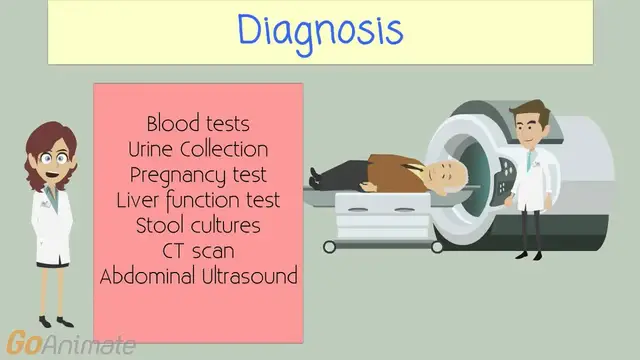
Diagnosis
The presence of abdominal pain can be caused by several different types of diseases or infections that healthcare professional will need to do rule out other possibilities.
Blood tests
Pregnancy test
Liver function test
Stool cultures
CT scan
Abdominal ultrasound
Treatment
Treatment of diverticulitis is dependent upon the severity of symptoms
Antibiotics
Pain medications
Bed rest
Bowel rest ( liquid diet for 1-2 days)
Increase more fiber to diet
Complications
Fistula formation – this is a an abnormal connection between another part of the body and the colon.
Perforation – this is a tear in the colon
Stricture formation – this is a narrowed area in the colon
Abscess formation – Area that is filled with pus or infection
Visit us at: //nursestudy.net/
http://www.facebook.com/NurseStudyNet
https://twitter.com/NurseStudyNet
https://plus.google.com/u/0/112148651665190185841/posts
http://www.pinterest.com/nursestudynet
Show More Show Less